August 15, 2026
Wildfires: when a surge of in-kind donations becomes a logistics problem

Since late July 2026, an exceptional wildfire has been burning through the Gironde region between Cap Ferret and Bordeaux, France. Over 115,000 hectares have burned nationwide, and roughly 220,000 people had to leave their homes in that département alone. As the scale of the disaster became clear, solidarity organized fast: the "Ensemble contre les feux" platform alone lists 121 mobilized nonprofits, split between firefighter support, aid to affected populations, and reforestation.
What those numbers don't show is what happens after the donation — inside the warehouses, requisitioned community halls, and vans of local nonprofits receiving, sorting, and redistributing dozens of pallets of clothing, essential supplies, and food within days.
The paradox of in-kind giving
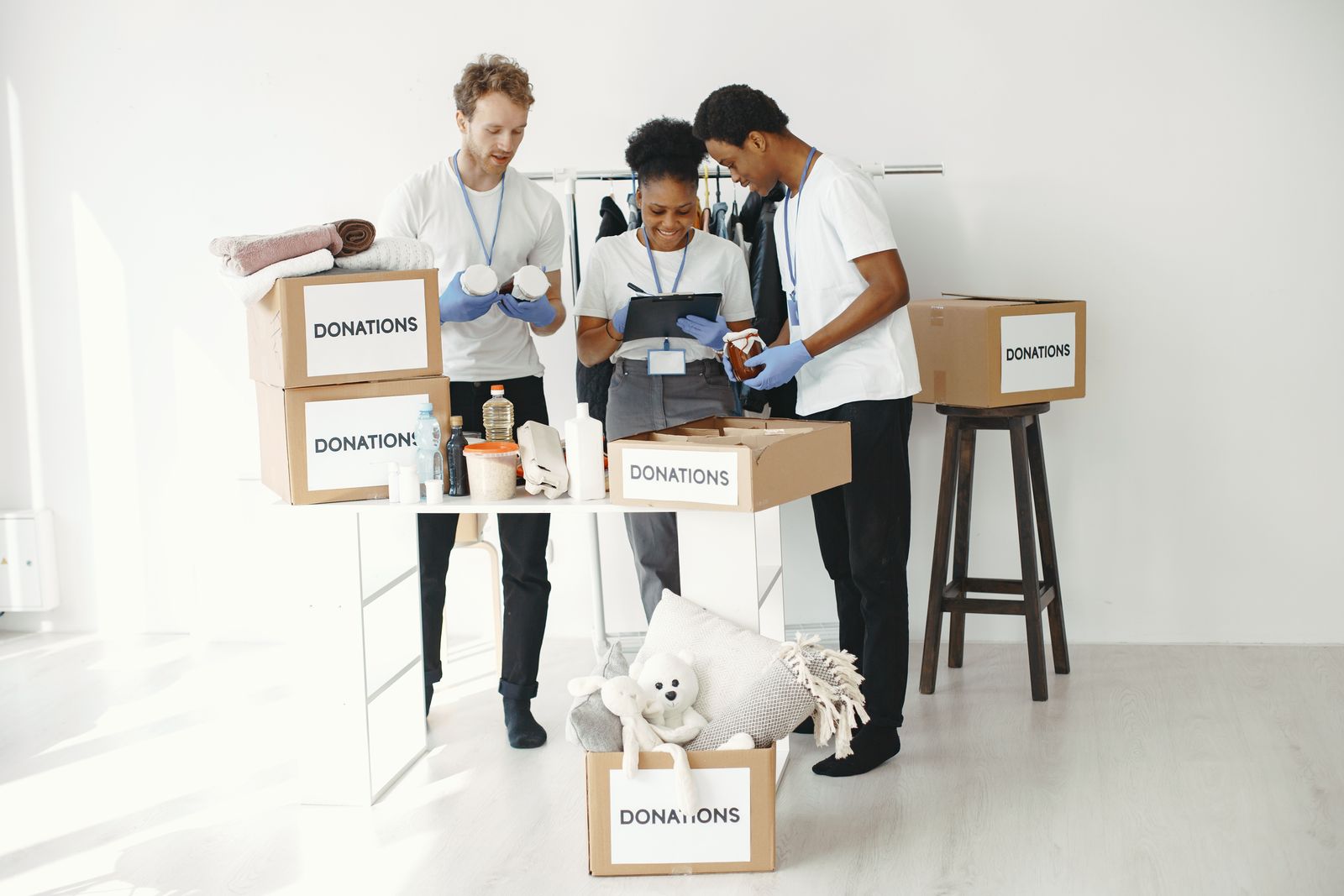
A financial donation is easy to track: it lands in an account, it's logged. An in-kind donation isn't. A nonprofit that suddenly receives 400 boxes of clothing, 200 hygiene kits, and pallets of water bottles faces a real operational challenge: where to store it, how to sort it, who received what — and, later, how to account for all of it to donors, institutional funders, or an auditor.
Without the right tooling, the default answer is too often a spreadsheet, or even a notebook. That holds up while volume is low. It breaks down the moment several volunteers enter data in parallel, stock is split across multiple collection points, or someone needs a reliable snapshot three weeks later for a mission report.
What real traceability changes in practice
Three issues come up again and again in what nonprofits report during a crisis response:
- Knowing what's actually available, warehouse by warehouse, so donors aren't asked for an item that's already oversupplied while another location is critically short.
- Tying every outgoing item back to its source — which donation, which date, which batch — to answer a traceability question (a product recall, a quality check, a funder's audit) without reconstructing the history by hand.
- Making sure a distribution was actually approved by the right person before stock goes out, especially when the team is suddenly reinforced by volunteers unfamiliar with the usual procedures.
That's exactly the ground Custodo was built for: a single stock movement type covering inbound, outbound, returns and losses, an append-only ledger where every entry stays readable and can never be silently altered afterward, and an approval workflow that scales with the size of the team instead of slowing it down.
A lesson that outlasts the emergency
Donation spikes triggered by a disaster are just an accelerated version of a problem every stock-holding nonprofit deals with continuously: generosity creates operational complexity, and unmanaged complexity ends up costing volunteers' time and donors' trust. The organizations that cope best aren't the ones that receive the most — they're the ones that know exactly what they have, where it came from, and where it's going.
You can support people affected by the summer 2026 wildfires via the Ensemble contre les feux platform.